This site uses cookies to store information on your computer. Some of these cookies are essential to make our site work and others help us to improve by giving us some insight into how the site is being used. By using our site you accept the terms of our Privacy Policy.
Privacy Policy
0
Loading
This site uses cookies


Mechanical water filters
33
models


Traps and drainage systems
120
models

Fill valves and flush mechanisms
20
models

Flexible hoses (connections)
156
models


Safety equipment (boiler valve, safety valves)
13
models


Multilayer pipes and fittings
32
models

PE pipes and fittings
260
models

Polypropylene pipes and fittings
268
models


Radiator fittings
10
models
Purifiers
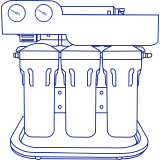
Water Purifiers
Water purifiers are modern water treatment and dispensing systems connected directly to the water supply. They are widely used in offices, business centers, medical facilities, educational institutions, and public spaces where continuous access to clean and safe drinking water is required without relying on bottled water.
What Is a Water Purifier and How Does It Work?
A water purifier is a multifunctional unit that treats tap water using an integrated filtration system. Depending on the model, purification may include carbon filters, reverse osmosis membranes, and additional polishing stages. After filtration, water is dispensed chilled, hot, or at room temperature.
- direct water supply connection — continuous water flow;
- multi-stage filtration — removal of impurities and contaminants;
- water dispensing — cold, hot, or ambient temperature.
Using water purifiers eliminates the need for bottled water delivery and reduces operating costs.
Advantages of Water Purifiers
- Continuous access to drinking water. No need to manage bottle stock or delivery schedules.
- Cost efficiency. Lower expenses compared to bottled water and traditional coolers.
What to Consider When Choosing a Water Purifier?
- Filtration system type. Selection depends on feed water quality and purification requirements.
- Capacity. Should match the number of users and water consumption level.
- Functionality. Availability of cooling, heating, and additional features.
- Maintenance. Ease of filter replacement and service support.
Why Choose Water Purifiers?
Water purifiers are a convenient and environmentally friendly solution for offices and public spaces. They provide stable drinking water quality, simplify logistics, and help reduce overall water supply costs.


